


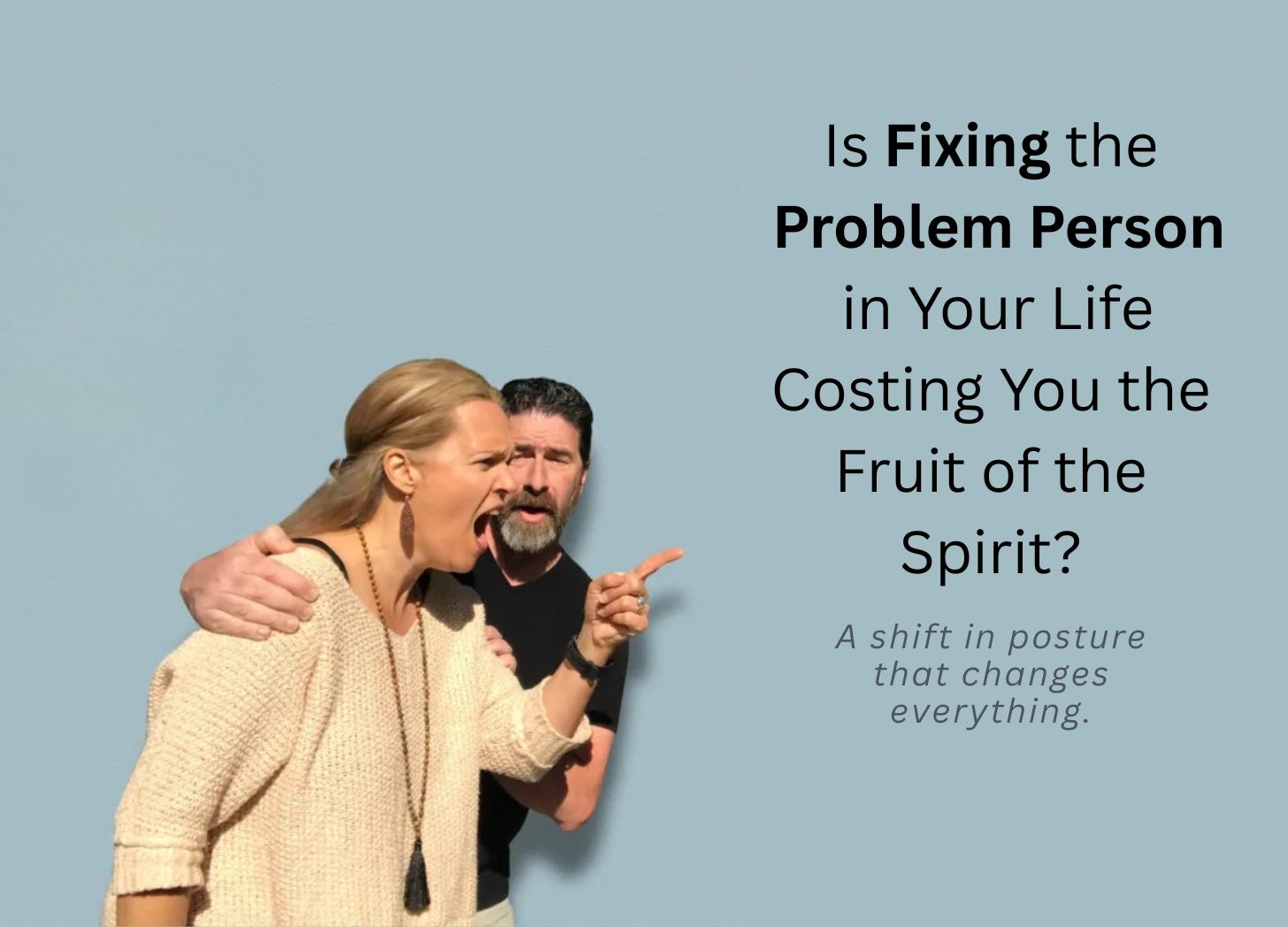
When I feel frustrated by someone else’s pace or path, I notice something shift in me. I stop offering help and start issuing ultimatums.
“You’ve got to hurry up and do what you said you’d do.”
“You need to fix this before something else happens.”
And suddenly, I’m not offering support but pressure.
Wait, I take that back. I’m offering control in the form of pressure. And, yuck!
And even yuckier, I’m not operating out of love, which I tell myself I am; I’m operating out of impatience. That inner urgency that flares up when someone doesn’t do life how I would do it. Doesn’t change fast enough. Or even speak or act the way I think they should.
And suddenly I’ve moved from walking alongside to pushing from behind. Not because I don’t care, but because I’ve started seeing them as a problem to fix instead of a person to love. Ouch! It’s hard when you start to see the reality behind your previously “unproblematic” words and actions.
And for many of us, this shows up most clearly with our grown children. You see them making choices, moving slower than you’d like, or not fixing things the way you think they should. And before you realize it, you’re not walking alongside them, you’re pushing from behind.
This sudden slip from a horizontal relationship into a vertical one, which puts you above them, is a recipe for disaster, especially if that other person is an adult.
Galatians 3:28 confirms that, “There is neither Jew nor Greek, slave nor free, male nor female, for you are all one in Christ Jesus.” We were never meant to build vertical relationships with other adults, even adult children. We’re meant to walk side by side. Not with power above and need beneath but equal in worth and different in pace.
A person’s value isn’t based on how quickly they grow. And ours isn’t based on how well we motivate them the grow. That shift in posture, back to a horizontal relationship, changes everything.
When I stop needing them to reflect well on me, or move fast enough to relieve my discomfort, I can offer something far more healing than pressure: Patience. And patience only grows when I stop producing my own fruit of frustration and start relying on the Spirit to grow His fruit of patience in me.
Frustration with others is the fruit of my selfishness. But patience? That’s the fruit of my Father. And it comes with some companions:
Gratitude for who they already are, not just who they might become.
And respect for the mystery of their process, and God’s work and timing in it.
Oh, and joy not in expected outcomes, but in walking together, and finding value in their very existence, not their performance.
I’ve found that impatience in the form of frustration turns people into tasks, tasks never assigned to me, but patience restores them as companions in this walk called faith, and restores my mind to see God as their Savior, not me.
And that’s the fruit I want to offer my brothers and sisters in Christ: Not pressure, but presence. Not a demand for perfection, but the gift of patience. Which allows me to be a witness, rather than a warden, a witness to what God is doing as I watch His hand at work in their life and in mine.
The Video
To find out more, catch my LIVE today at 11:00 by clicking here or in your email!

The Book
If this resonates with you, you just might love Fruitful. It’s a journey through the fruit of the Spirit, love, patience, joy, self-control, and more, and how each one can actually take root in your life, especially in messy, real relationships.
If you are doing a book study in your small group this year, we also have the discussion guide available for free right here.

You can order your copy of Fruitful on Amazon.
“Respect for the mystery of their process…” That word “respect” is eye-opening for me.
Excellent description of the problem (me! 🥴). I have been this person trying to fix others rather than loving and supporting them, wherever they are in their journey. My shift in perspective now has more clarity, thanks to your insightful writing.