


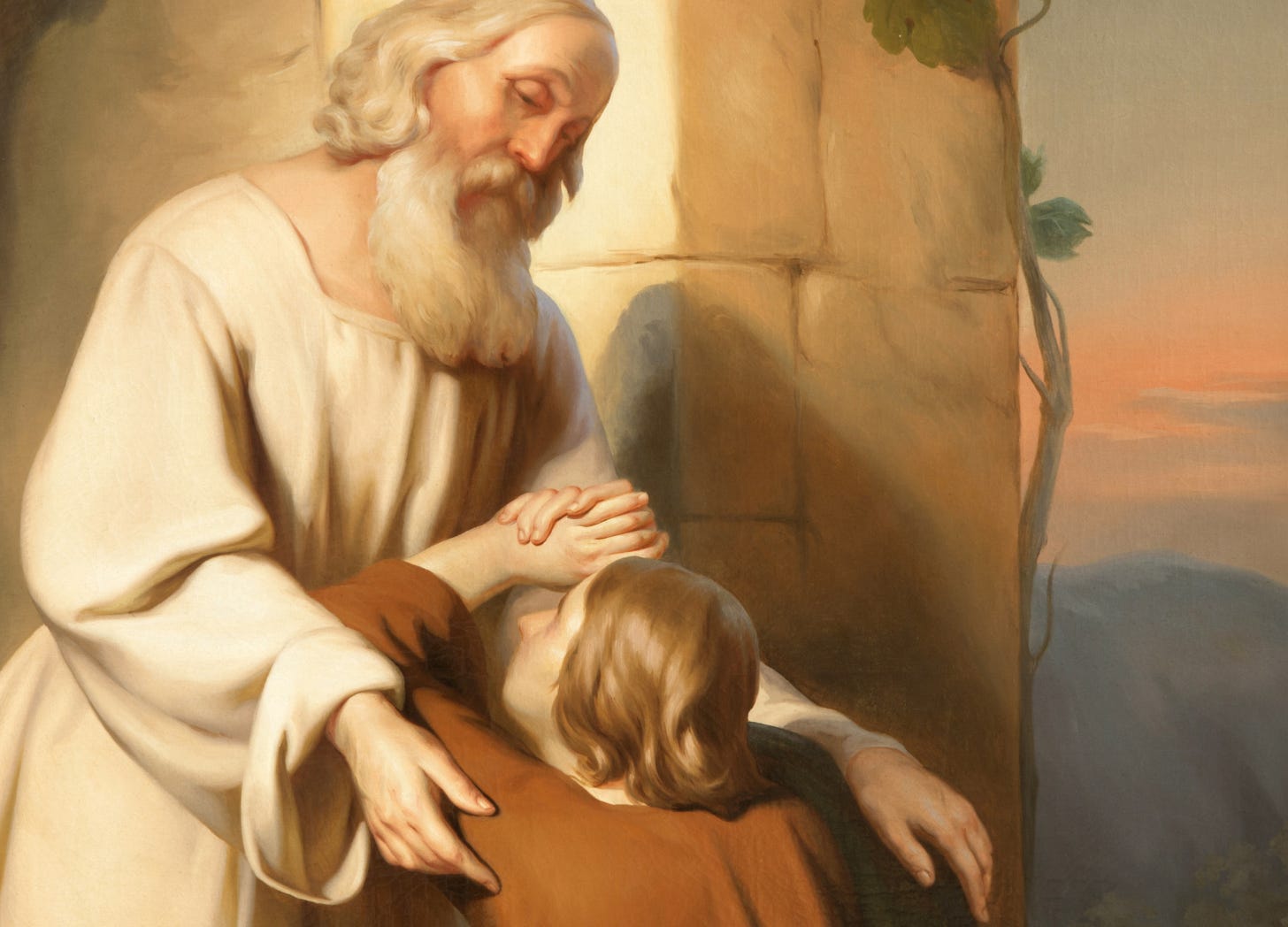
I don't want to pray like the prodigal, who thought he needed a speech to overcome his father's reluctance to love him.
How little did he know his father?
A few weeks ago, I said that prayer is not overcoming God’s reluctance, but laying hold of His willingness.
I made the biblical case that God doesn’t need our convincing. But the question has come up, if God isn’t reluctant, why do so many of us pray like He is?
I think the prodigal may know.
I mean, obviously, the leaving part of the prodigal shows us he didn’t know the value of the father’s presence, but the coming home part shows us he didn’t know the riches of the father’s generosity.
From his speech prep, he obviously knew his sin better than he knew his father. More prediction than a confession, the speech prep proved that he thought the speech would determine his father’s response.
It didn’t.
The father had already decided what kind of father he was going to be, long before the speech.
That’s why I don’t want to pray like the prodigal.
Just like the father of the prodigal, God is already willing to do what He has promised. I don’t have to persuade Him to be generous, merciful, or faithful. Persuasion assumes He’s going to resist. I mean, we persuade juries, customers, voters, kids to eat their vegetables and reluctant spouses to watch documentaries about the French Revolution.
We persuade someone who isn’t totally convinced. But prayer is in a completely different category altogether.
So why do we often feel like we’re trying to persuade a reluctant God?
The Waiting
God’s timing is not our timing, and because waiting on His timing has a way of changing what we believe about prayer, the longer we wait, the easier it is to think delay equals reluctance. But the Bible says something completely different.
The promise God made to Abraham was never in jeopardy, though literally decades passed before Isaac was born. (Genesis 21:1–2)
Joseph waited thirteen years between the dreams God gave him and his elevation in Egypt. (Genesis 41:39–41; 50:20)
David waited for over a decade between Samuel's anointing oil and the day he finally wore the crown.
Israel waited four hundred years in Egypt. (Exodus 3:7–10)
So, no, I don’t think delay is the language of reluctance. The Bible never equates the two. Peter calls apparent slowness patience. Habakkuk calls it an appointed time. At Lazarus’s tomb, Jesus calls it glory. And we call it unfair. Like Martha we say, “If you would just have done something, life wouldn’t be like this.”
And can you blame her? Jesus was slow in coming to the greatest crisis of her life. Four days had passed since she urgently needed him. Her brother didn’t survive the wait. He was dead and buried. From her perspective, the window had closed, and Jesus had been too late.
But Martha was getting her conclusions from the timing.
She knew Jesus had power. What she doubted in that moment was His plan, maybe even, dare I say, His goodness.
But that delay wasn’t evidence of His indifference. It was the very thing He intended to use to show the world His glory.
So while she was judging the delay by what it had cost her, Jesus was revealing something she couldn’t yet see.
The Father We Have
The prodigal came home expecting to negotiate for a place among the servants and found a father running toward him. Martha came grieving a delay she couldn’t understand and found that Jesus had not abandoned her in it.
Neither got God’s character exactly right, but neither misunderstanding changed who God was or how He responded.
Thankfully, God doesn’t wait for people to get His character exactly right before He runs to meet them.
That’s what suspicion does. It takes what we don’t understand and fills in the gaps with a God who is less willing, less present, and less good than He really is.
But the Father has already decided what kind of Father He is going to be. Which means the greatest obstacle in prayer may not be God’s reluctance, but our suspicion. And suspicion has a way of writing speeches that love never asked for.
I’m wondering how many of my prayers have been speeches written by suspicions His love never gave me reason to believe.
Agreed, this is great. That's what I felt with my accident, relax, God has a plan so I am taken care of. How his plan unfolded is testimony to his glory. Amen!!!
I am going to read this over and over today. This is great!