


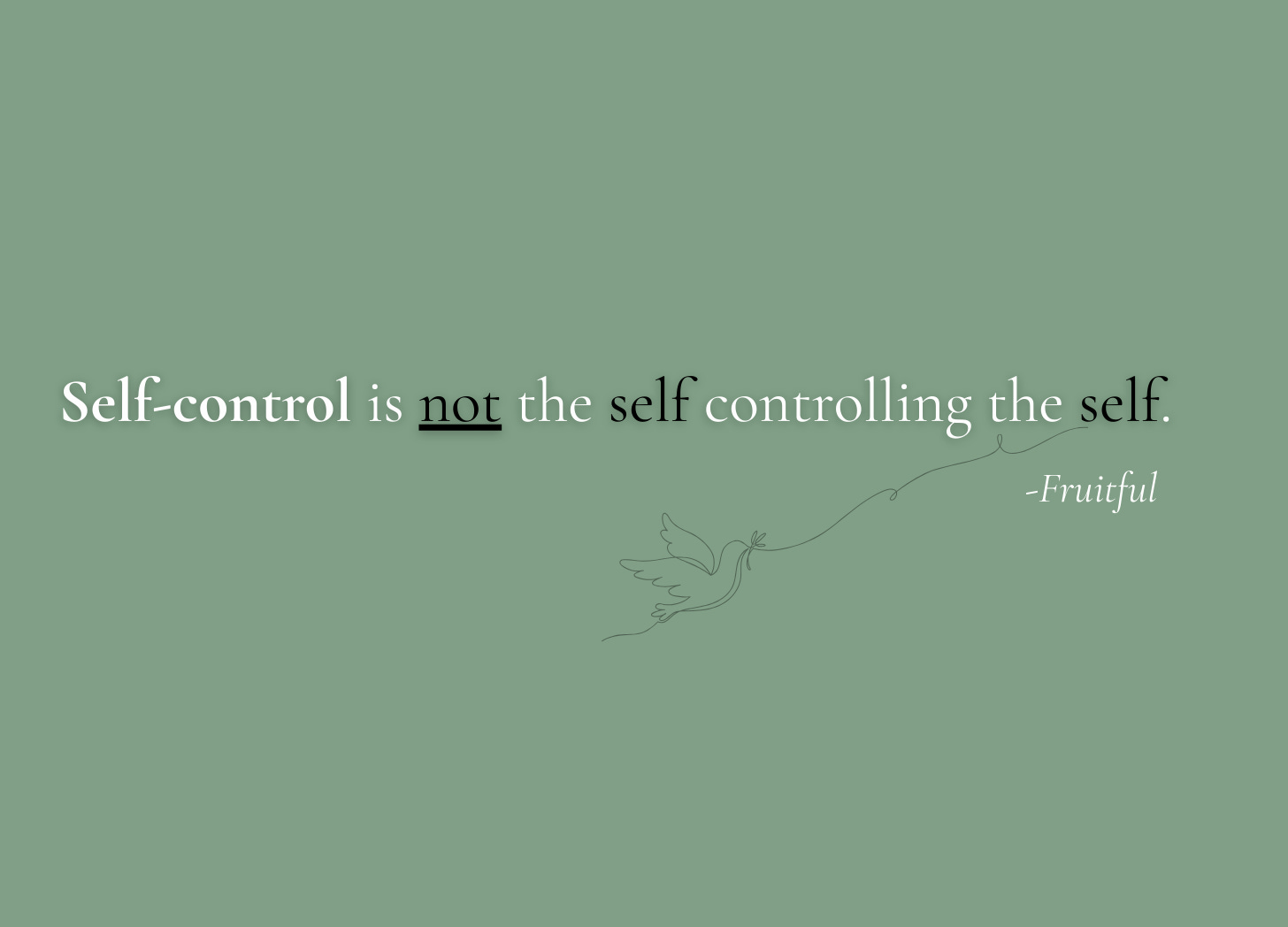
Thinking that the self is the source of self-control is like asking fire to put itself out. The instrument that needs mastering cannot master itself, and maybe that’s why so many of us lack self-control.
In the Bible, the “self” is not the source of self-control. It’s the thing being governed.
Underneath our lack of self-control is one root problem: our attempt at mastery apart from the Spirit.
What looks like “control” from the outside is actually reliance on a power beyond us, choosing to let the Spirit succeed where the self fails.
The opposite of Spirit-governed self-control, or Spirit-reliance, isn’t indulgence on the one hand or rigid willpower on the other, but something at the root of them both: self-reliance. Because whether we trust the self’s cravings as if they’re real needs or trust the self’s strength to manage those cravings, we’re still relying on the same powerless source: the self.
Many of us lack self-control because we mistakenly believe that by appealing to ourselves, by trying to inspire ourselves, setting personal goals and plans, and finding our own reasons for our actions, we can somehow achieve it. But this is moralistic self-control.
Self-control is one of the most misunderstood aspects of the fruit of the Spirit. We reduce it to discipline and turn it into a personality strength, or we just confuse it with suppression.
In the Self-Control chapter of Fruitful, I unpack why biblical self-control is not self-mastery but Spirit-reliance.
You can listen to the full chapter below.
If you would like to listen to the rest of Fruitful as an audiobook, it is available on Audible.com.

The print edition is available on Amazon.
I so enjoyed this book! I listened to a part of this chapter and wanted to say how enjoyable it was to hear your voice and how great your voice intonations had me totally engaged. Well done dear friend!