


In my twenties, shopping was my coping mechanism.
Bad day? Target run.
Feeling aimless? New throw pillows.
Stressed? Add to cart.
I didn’t realize I was using spending to regulate my emotions until I was $20,000 in debt and surrounded by things I didn’t actually need, and feelings I never actually faced.
That’s when I started to understand something psychologists have long known:
Just the act of imagining a future purchase, browsing, saving, or even just curating can light up the same reward centers in the brain as actually buying.
It’s called anticipatory dopamine.
Turns out, our brains don’t just like having things; they like collecting visions of what could be.
That little lift you feel while scrolling, while imagining your future kitchen or your future wardrobe or your dream house, feels so good because your brain is wired to respond to the possibility that something better could be just ahead.
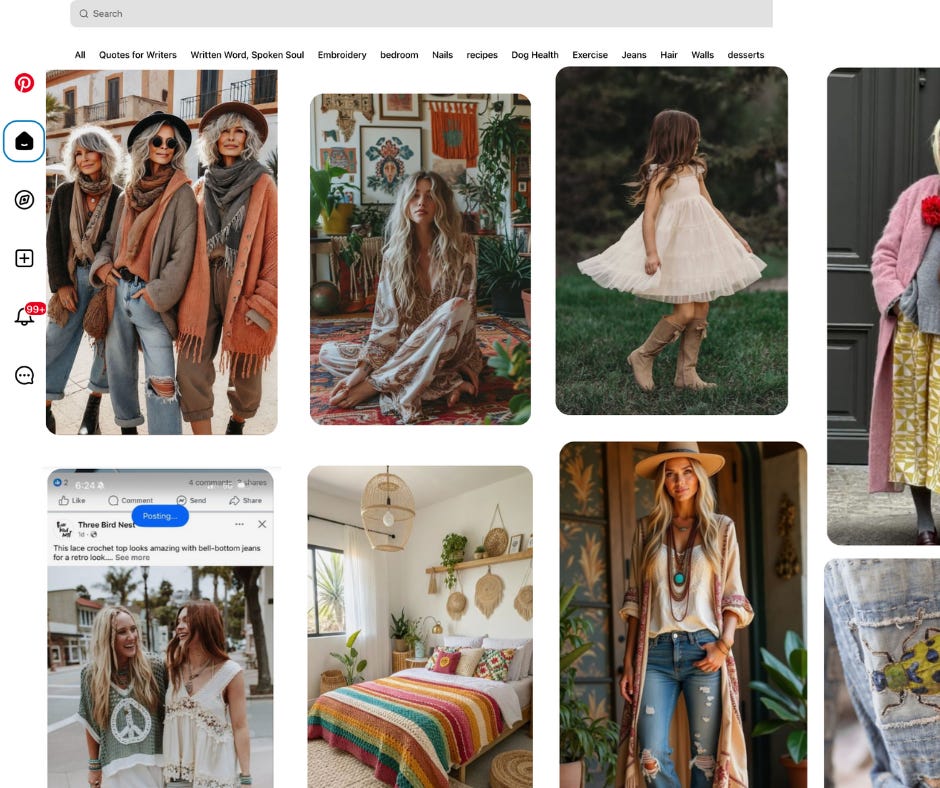
Which is why I now consider Pinterest the gentler, wiser version of shopping therapy.
No checkout.
No guilt.
No clutter.
Just ideas.
Just hope.
Just a little window shopping for the soul.
But that feeling, the lift, the almost-beauty of what could be, isn’t just about stuff. It’s the same part of your brain that responds when you stand at the edge of the ocean. Or when a song wrecks you in the best possible way. When you get that unexplainable sense that life could be fuller, richer, and more alive than it is right now.
That’s the part of us that was made for awe.
Shopping just borrows that awe and shrinks it. It gives us a counterfeit version of transcendence, something you can hold onto, control, and bring home in a paper bag. But consumer awe is hollow awe, and it offers nothing but a finish line. Once the item is on your shelf, the awe of possibility dies. The sparkle fades, the dopamine dips, and you’re forced to start the hunt all over again.

But awe doesn’t die off like that, and neither does worship, because they don’t end in you possessing something that loses its sparkle, they end in adoration.
That same pull you feel when you’re curating a life you’d love to live is the same feeling you get when you see the power of a waterfall, or consider the billions of galaxies like ours, and realize we haven’t even made it to the edge of this one.
Shopping therapy may feel natural, but we weren’t wired to be satisfied by the purchase, but by His beauty, His power, His presence. We were made to be drawn to His goodness and to feel the ache of thinking there’s got to be more than this, and then to discover that More.
So go ahead, pin that She Shed, those lemon-blueberry scones, that walk-in pantry with the glass jars. In a world that can feel gray, there is a sweetness in practicing imagination and delighting in beauty, a capacity God designed you for. Only don’t mistake the gift for the source. Be careful that your dream boards don't become monuments to discontentment, but rather prompts for gratitude.
Because Pinterest may stir the feeling and even give you a glimpse of what your heart is reaching for, but it trades the real thing for a version you can control. Which means that feeling you keep trying to satisfy with something new might not be asking for something new at all. Maybe it’s asking for something that doesn’t fade once you finally have it.
Worship feeds my soul. Believing and seeing the awesomeness of God moves everythingelse away.